
 EN
 DE

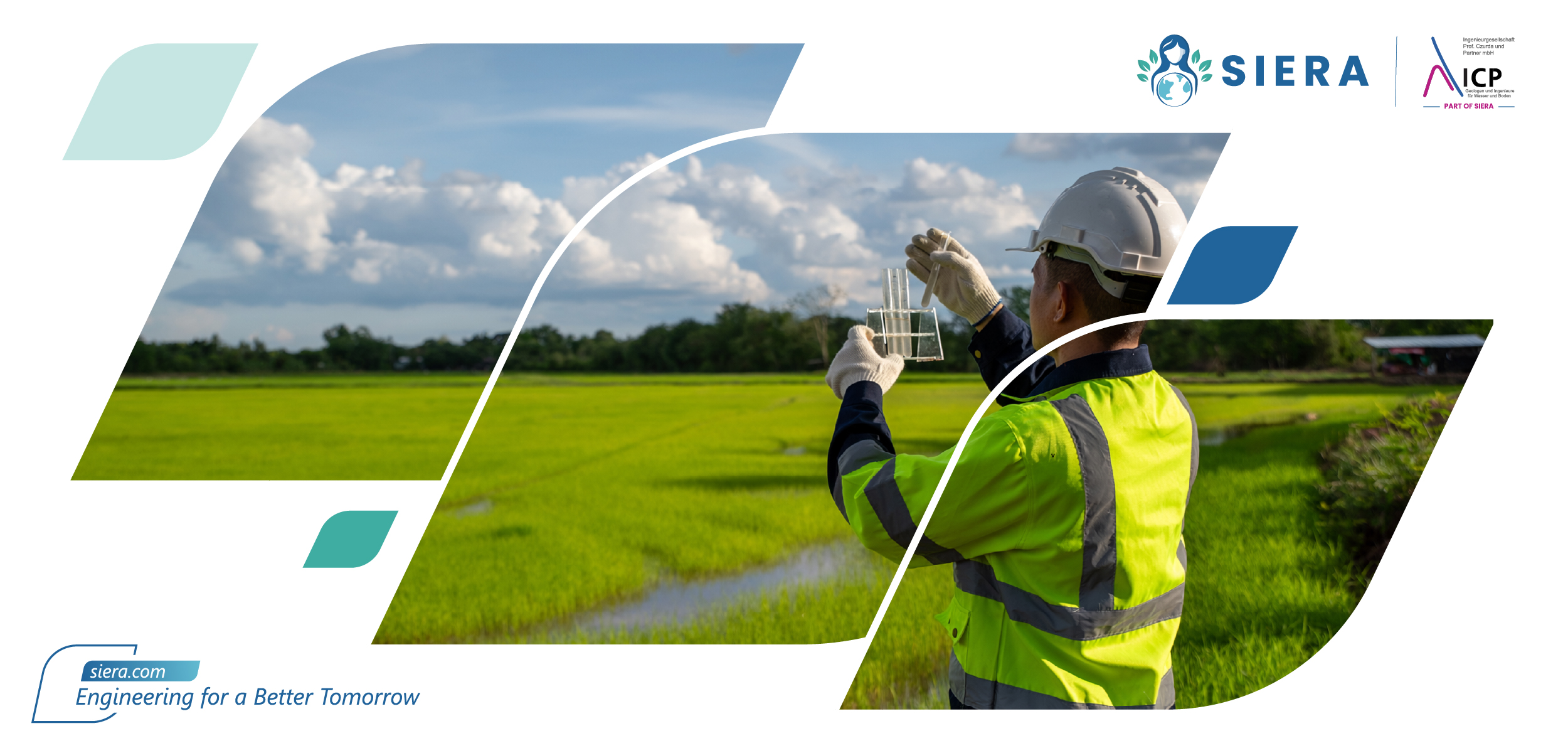
Infrastructure, maintenance and refurbishment projects generate materials, and decisions must be made regarding their subsequent handling. Can they be reused? Do they require treatment? Or do they need to be disposed of?
These issues should not be addressed only once the material is already on site. Its composition and quality can influence which methods are permissible and appropriate. An early assessment of the material therefore provides a basis for planning – from sampling right through to a well-founded decision on reuse or disposal.
@ICP Engineering Consultants – Part of @SIERA – supports this work through representative sampling, material characterisation, environmental analyses and expert assessment. Structured documentation sets out the basis on which the results were arrived at and how they can be used within the project.
Why material quality cannot be assessed across the board
Materials from construction and refurbishment projects vary in terms of their origin, composition and history of use. Even within a single site, different areas may have different properties. A single assumption about „the material“ is therefore not always sufficient.
To carry out the assessment, it must first be clear that, which material flows arise and what decision should be made regarding each one. Is this about potential reuse? Does a mineral material need to be assessed for a specific recovery route? Or is information required for disposal?
The research question determines which samples are taken, which parameters are analysed and which requirements must be taken into account during the evaluation. Equally important is the population to which a result is intended to apply. Only in this way can it be assessed whether an analysis is relevant to the planned decision.
Representative sampling: The basis for reliable results
A laboratory analysis can only characterise the material that was submitted as a sample. For the results to be applicable to a larger material stream, the sampling must adequately reflect its properties.
This requires careful planning: Which areas or batches need to be distinguished from one another? Where are samples taken? How is it recorded which material the results relate to?
The team at @ICP Engineering Consultants within @SIERA combines sampling with subsequent characterisation. The aim is to create a dataset that is tailored to the specific project question – not merely a collection of measurement values with no clear link to the material in question.
If material properties change during a project or additional quantities are required, a reassessment may be necessary. Early investigation is therefore an important first step, but it is no substitute for careful attention during implementation.
What material characterisation and environmental analysis achieve
Material characterisation describes properties that are relevant to the material’s subsequent handling. Environmental analyses supplement this with information on potential pollutants. Together, they enable a technical assessment of the material’s quality.
| Step | Key question | Benefits for the project |
| Tracking material flows | Which materials are generated, where, and in what quantities? | Planning investigations in a targeted manner |
| Representative sampling | Do the samples represent the material to be assessed? | Enabling meaningful analyses |
| Characterise the material | Which properties are important for the intended use? | Classifying possible approaches from a technical perspective |
| Analysing environmental data | What types of chemical contamination were detected? | Check the requirements for recycling or disposal |
| Document results | What do the test and assessment relate to? | Making decisions transparent |
The results do not automatically provide the answer „recycle“ or „dispose of“. First, they must be assessed against the requirements of the specific recovery or disposal route be adjusted. The application may depend, for example, on the material properties, the intended use and the conditions at the installation site.
Examine recycling options without compromising environmental protection
Conserving resources is an important objective. However, this does not mean that every type of material produced can or should be recycled. The decision must be based on sound technical grounds and take into account the protection of people and the environment.
The Circular Economy Act describes a waste hierarchy in which prevention and recovery take precedence over disposal. However, which measure is appropriate in each individual case also depends on the properties of the material and the relevant requirements. A material assessment helps to base this decision on data rather than on assumptions.
In certain mineral-based alternative building materials and installation methods can also be found in the Regulation on Alternative Building Materials may be relevant. Whether and how it applies to a material flow must be assessed on a project-by-project basis. The mere mention of a set of regulations does not replace an assessment of the specific case.
Documentation makes decisions transparent
Materials management does not end with a laboratory result. Project teams must be able to recognise that, what material was examined, what the analysis revealed, and on what basis the technical assessment is founded.
Structured documentation can, for example, bring together sampling points, material allocation, test results and the assessment derived from them. It facilitates communication between the planning department, the construction site and other parties involved.
This is also important for quality assurance. If new quantities of material arise, deviations are identified or a planned recycling route changes, the team can refer to the existing documentation and carry out a targeted assessment to determine whether any additional steps are required.
In this way, individual samples and analyses provide a useful basis for decision-making as the project progresses.
Incorporate material assessment into the planning process at an early stage
Anyone who only considers the issue of materials once excavation or demolition has begun often has to make decisions under time pressure. An early assessment, on the other hand, helps to identify potential material flows and to review the requirements for their subsequent handling in good time.
A structured process might look like this:
- Understanding the project and materials: What work is planned, and what materials are likely to be required?
- Specify tests: What samples and analyses are required for the decisions that lie ahead?
- Assessing results from a technical perspective: What do the data reveal about material properties and potential stresses?
- Check routes: Which recycling or disposal options are suitable given the relevant requirements?
- Documenting and reviewing decisions: Do the materials examined correspond to those actually generated during the work?
This process can enhance planning certainty. However, it neither guarantees a specific recycling route nor ensures that the material conditions will not change whilst the work is in progress.
Using resources responsibly
A thorough assessment of materials serves two purposes: to retain resources where appropriate recovery is possible, and to dispose of materials properly where necessary. Both decisions require reliable information.
Through sampling, material characterisation, environmental analyses and clear documentation, it contributes to @ICP Engineering Consultants together with @SIERA This helps to categorise material flows in infrastructure projects at an early stage. This supports the compliant, traceable and resource-efficient management of materials generated during construction, maintenance and refurbishment works.
CTA
Are you planning an infrastructure, maintenance or refurbishment project? Check at an early stage what materials will be generated and what data you will need to make decisions about recycling or disposal. Get in touch with the team at @ICP Engineering Consultants – Part of @SIERA, to discuss the material specifications for your project.
Engineering for a Better Tomorrow